
Categories
Recent Posts
Industrial Control Repair
January 16, 2025

Automation is changing how we do business in nearly every industry, and industrial controls are at the heart of every automated system. Equipment failure leading to unexpected downtime is one of the worst-case scenarios. When something goes wrong, partnering with the right industrial control repair provider is critical.
Quad Plus industrial machine repair technicians are standing by 24 hours a day, every day, with the tools, knowledge, and experience to diagnose and repair industrial controls, drives, circuit breakers, and more. If you’re searching for a trusted partner to solve your industrial repair problems, here is everything you need to know to make the best decision for your operation.
What Are Industrial Control Systems?
An industrial control system is one or more control components that monitor and control physical processes in machine applications. Industrial controls can link machines together, allow workers to interface with machinery digitally and physically, and integrate with software to achieve manufacturing goals, improve transportation, speed up packaging and shipping, revolutionize healthcare, and more.
Some examples of industrial control system components include:
- HMI: Human Machine Interface
- IED: Intelligent Electronic Devices
- PLC: Programmable Logic Controllers
- SCADA: Supervisory Control and Data Acquisition
- Control Valves: Devices used to control processes
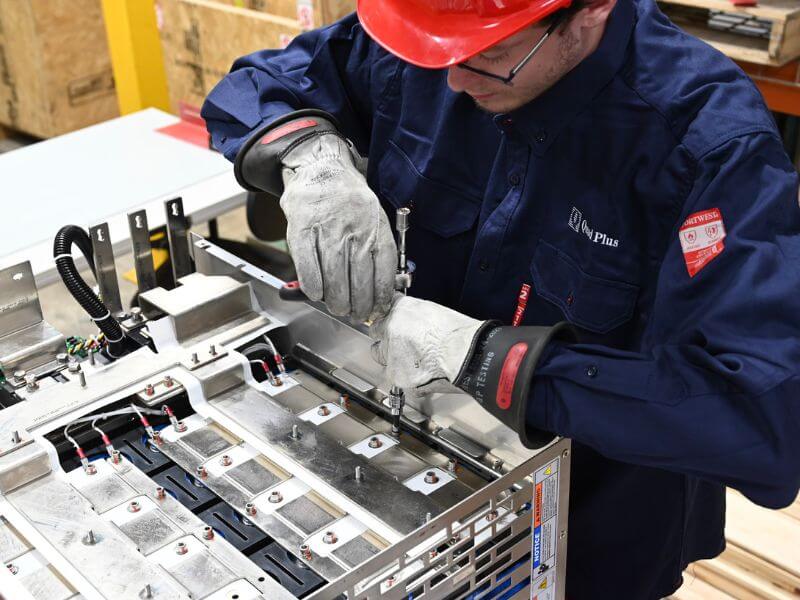
Key Factors When Choosing Industrial Control Repair Providers
The right provider will have a major impact on your operation’s success and the long-term life of your equipment. When evaluating potential providers, here are a few key factors to keep in mind.
- Experience. The right provider will have years of experience in your industry, preferably with your specific application. Their technicians should also have extensive experience with a variety of industrial control systems.
- Range of Services. By choosing a service provider who offers a wide range of services, you can reduce the number of providers you must work with for different tasks. Other services to consider are acceptance testing, maintenance, circuit breaker repair, and retrofits.
- Reliable Support. The best provider is only helpful if available when you need it! Not all industrial control repair needs are emergencies, but when your entire production line comes to a halt on a Friday evening, the last thing you need is to wait until Monday morning to reach your provider. Find a provider who provides around-the-clock emergency service and support.
- Strong Communication. You shouldn’t have to chase down quotes for service or updates on repairs in progress. The right industrial control repair provider will keep you up-to-date on all projects and ensure you receive all documents and reports on time. Customer reviews are a great place to discover whether a provider has a good reputation for customer communication.
The Importance of Response Time in Industrial Control Repairs
The driving force behind automation technology is to make things faster. When equipment failures lead to unexpected downtime, delays in industrial control repairs can mean significant financial losses. Rapid response times from repair providers can mean the difference between an inconvenience and a catastrophe.
Your operations’ speed and efficiency are also crucial to your customers. Lengthy disruptions can damage your reputation or cause clients to choose another company. Maintaining your competitive edge means avoiding downtime whenever possible and minimizing the impact whenever it strikes.
What to Look for in a Provider’s Repair Tools and Technology
Advanced technology should be critical to your industrial control repair provider. Look for a provider with advanced diagnostic tools such as automated test benches, simulation software, and in-circuit emulators. Diagnostic tools should include signal generators and analyzers, data capture systems, logic analyzers, and the ability to deliver component-level repairs.
It is also important to find providers with technicians trained by OEMs for their specific systems. They should have manufacturer-specific tools when necessary and access to the latest software the manufacturer provides.
Common Pitfalls to Avoid When Choosing an Industrial Control Repair Partner
Training and experience are critical when choosing an industrial control repair provider. Avoid any companies without a proven track record in servicing controls across a variety of brands and manufacturers and in different applications. Other pitfalls to avoid include:
- Limited Capabilities. The right company to partner with will have a range of repair capabilities that include components such as HMIs, PLCs, drives, sensors, and more. Your repair provider should have experience servicing components from different manufacturers and knowledge of both legacy devices and new technology, including mixed environments.
- No Access to Parts. Sourcing common parts may be easy for most providers, but many operations rely on legacy equipment that the manufacturer no longer supports. Your partner should have an inventory of common and hard-to-find parts and the ability to quickly source parts when necessary.
- No Emergency Service. Emergency repair services should be available 24 hours a day, every day, all year long. Look for a provider with onsite service and remote support for the best coverage.
- No Warranty or Support. If a service provider will not stand behind their work, why should you? Only partner with an industrial control repair provider who offers a warranty on their work and provides technical support following a repair or installation.
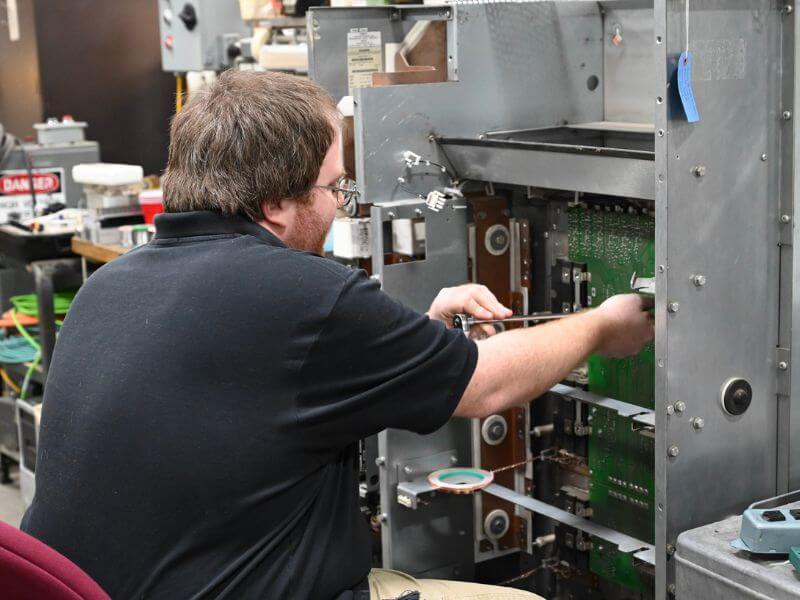
Ensuring Compliance with Industry Standards in Control Repairs
Safety and manufacturing standards exist to keep people safe when working in hazardous environments and to protect expensive equipment from damage. Your industrial control repair partner should know all applicable standards when completing work on any equipment.
Two main standards apply when working with industrial controls. The National Electrical Manufacturers Association (NEMA) provides standards and general information for ratings, testing, performance, and the manufacturing of industrial and control systems. Industrial control repair technicians must also follow OSHA standards for the Control of Hazardous Energy (Lockout/Tagout) and use proper PPE to protect themselves from dangerous working conditions.
Industrial Control Repair Partner You Can Trust
The experts at Quad Plus have decades of experience in every industry, including manufacturer training from Siemens and ABB. We have exclusive access to OEM documentation to tackle your issues and provide repairs using the manufacturer’s schematics.
We provide onsite support dispatched to your location to provide quick solutions and reduce downtime. Once configured, our remote support specialists can gather information from your system, review the information, and make recommendations.
Our expert repair team is available 24 hours a day, every day, to solve your problems quickly, efficiently, and safely. Plus, you will enjoy a one-year warranty on all repairs and equipment services performed by a Quad Plus expert.
When you’re ready to partner with an industrial control repair expert who is as invested in your operation’s outcome as you are, it’s time to call Quad Plus.
Frequently Asked Questions
The most important factors to consider when choosing an industrial repair provider are experience, extended technical capabilities, access to parts, fast turnaround times for repairs, 24-hour emergency response, and comprehensive support following all repairs and installations.
The inspection frequency will be dictated by the manufacturer and will vary depending on the operating environment and the equipment usage. In most cases, annually inspecting industrial control systems is sufficient.
Quad Plus provides a one-year warranty on all equipment repairs and services our team performs.