
Categories
Recent Posts
How to Repair Circuit Breaker Issues
March 20, 2024
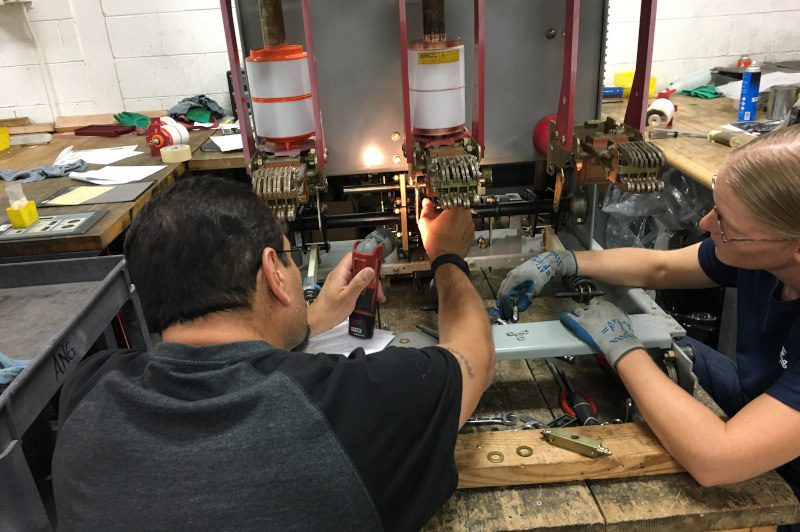
Industrial circuit breakers are essential for protecting your equipment and operations. When a breaker starts to fail, knowing how to diagnose issues and perform repairs correctly is critical to preventing downtime and equipment damage.
This guide explains how industrial circuit breakers work, common issues to watch for, and how to repair circuit breaker equipment safely with support from certified Quad Plus technicians.
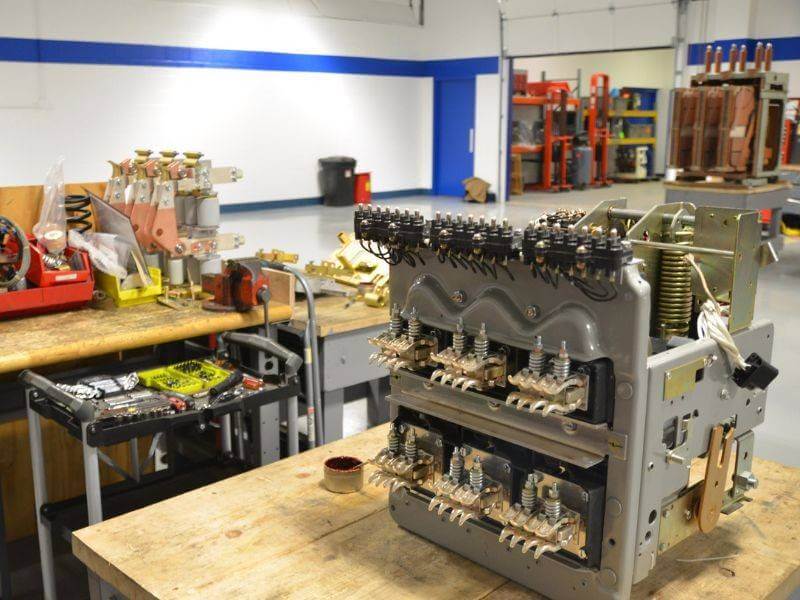 What are industrial circuit breakers?
Industrial circuit breakers are specialized electrical devices designed to protect equipment and power distribution systems in industrial environments.
Often classified by voltage class and type, they serve a crucial role in safeguarding against overloads, short circuits, and other electrical faults that could lead to damage, fires, or injuries. Industrial circuit breakers are typically more robust and capable of handling higher voltages and currents compared to residential or commercial circuit breakers.
Types of industrial circuit breakers include:
- Molded Case Circuit Breakers (MCCBs). MCCBs are compact, enclosed circuit breakers commonly used in industrial applications. They feature a molded case housing containing the circuit breaker mechanism and are available in various voltage and current ratings.
- Air Circuit Breakers (ACBs). ACBs are larger, open-frame circuit breakers designed for higher current applications. They use air as the arc extinguishing medium and are suitable for protecting large motors, generators, and distribution systems.
- Vacuum Circuit Breakers. Vacuum circuit breakers use a vacuum to extinguish the arc when the contacts separate. They offer fast, reliable current interruption and are commonly used in medium- and high-voltage applications.
- SF6 Circuit Breakers. Sulfur Hexafluoride (SF6) is a compact, medium-voltage circuit breaker suitable for applications with limited space, such as high-voltage substations.
These variations influence how to repair industrial circuit breakers when components fail or performance declines.
Common Issues that Require Industrial Circuit Breaker Repair
Understanding common issues is essential when learning how to repair circuit breakers effectively. Excessive heat, repeated fault interruptions, contaminated components, or mechanical wear can lead to reduced performance or failure.
Common industrial circuit breaker problems include:
- Deteriorated contacts
- Weakened springs
- Sluggish or non-functional trip mechanisms
- Insulation breakdown
- Buildup of dust, moisture, or corrosion inside the breaker housing
Breakers that experience repeated tripping or operate in harsh environments are especially prone to these issues. Addressing these problems early is a key part of knowing how to repair a circuit breaker correctly.
How Do Industrial Circuit Breakers Work?
Industrial circuit breakers monitor the flow of electrical current within a circuit and interrupt it when necessary to protect equipment and personnel from overloads, short circuits, and other electrical faults.
When the electrical current exceeds a predetermined threshold, such as during an overload or short circuit, the circuit breaker’s trip mechanism is activated, causing the contacts to separate rapidly. This interruption of the electrical circuit stops current flow, effectively isolating the fault and preventing damage to the equipment.
After the fault is cleared and the circuit breaker is reset, normal operation can resume. Industrial circuit breakers employ various mechanisms, such as thermal, magnetic, or electronic trip units, to detect abnormal currents and initiate tripping. Additionally, advanced features such as selective coordination and arc-flash mitigation enhance the safety and reliability of industrial electrical systems.
A clear understanding of breaker operation also supports proper circuit breaker troubleshooting and knowing how to repair circuit breakers safely.
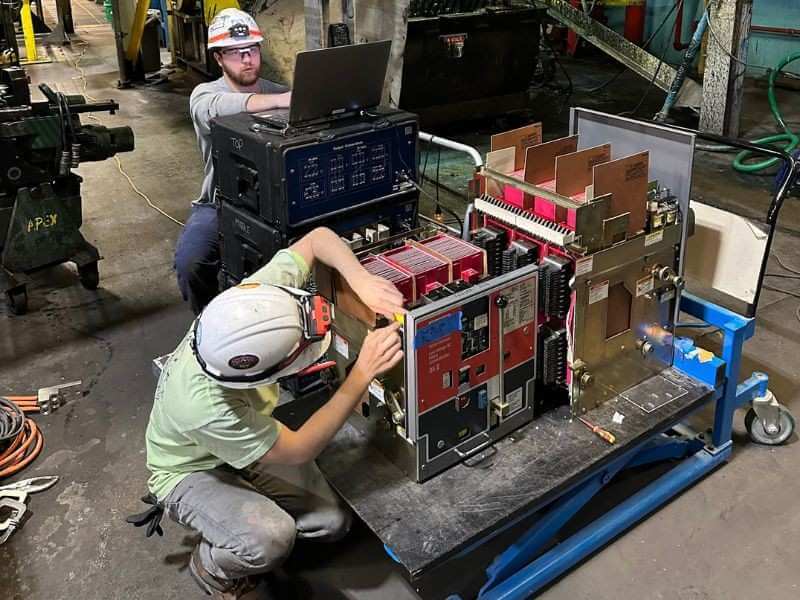
How to Repair Circuit Breaker Equipment Safely in Industrial Settings
Knowing how to repair industrial circuit breaker equipment starts with a controlled, step-by-step approach that protects both the technician and the electrical system. Proper procedures ensure the breaker is serviced accurately and returned to safe, dependable operation.
- Identify the problem. The first step in repairing an industrial circuit breaker is identifying the underlying issue. This begins with a structured inspection of mechanical, electrical, and environmental factors that could be affecting performance, especially when determining how to repair circuit breakers accurately.
- Follow proper safety precautions. Before attempting any repairs on an industrial circuit breaker, it’s crucial to follow proper safety precautions to prevent electrical accidents and injuries. This includes de-energizing the circuit, using appropriate personal protective equipment (PPE), and following lockout/tagout procedures to isolate the power source.
- Disassemble and inspect components. Once the circuit breaker is safely de-energized and isolated, it can be disassembled for inspection. We carefully examine each component for signs of damage, wear, or corrosion, and clean any dirt or debris that may have accumulated inside the circuit breaker, as this can affect its performance and influence how to repair circuit breaker components accurately.
- Replace parts and components. If any components are found to be damaged or faulty during the inspection, we replace them with new ones. Common replacement parts include contacts, springs, trip mechanisms, and arc chutes.
- Calibrate and test. After replacing any faulty components, we calibrate and test the industrial circuit breaker to ensure proper operation. This may involve adjusting the trip settings, testing the trip mechanism, and conducting a series of electrical tests to verify that the circuit breaker can handle the expected load.
Repairing industrial circuit breakers requires a combination of technical knowledge, careful inspection, and adherence to safety protocols. That’s why we ensure all our experienced circuit breaker maintenance personnel have extensive knowledge and follow proper repair procedures to ensure the continued reliability and safety of electrical systems in industrial settings.
Warning Signs Your Circuit Breaker Needs Professional Repair
Industrial breakers rarely fail without warning. Early indicators that an industrial circuit breaker needs repair include frequent or unexplained tripping, visible scorching or discoloration, and components that feel unusually warm during operation. You may also notice buzzing sounds, a burning odor, delayed tripping response, or signs of wear on mechanical linkages.
These symptoms indicate that internal components may be degrading or contaminated. When these signs appear, it’s important to schedule professional industrial circuit breaker repair services quickly to avoid unexpected outages or safety risks.
When Circuit Breakers Should Be Repaired or Replaced
Deciding whether to repair or replace an industrial circuit breaker depends on the condition of the internal components and the severity of the fault. Many performance issues can be corrected through repair, especially when identified early during routine circuit breaker maintenance. Repairing a breaker is often the most cost-effective option to restore performance without long lead times or higher costs associated with a full replacement.
Replacement becomes the better choice when breakers have extensive mechanical damage, repeated failures, obsolete parts, or compromised insulation that cannot be restored to a safe operating condition. In these cases, installing a new unit ensures long-term reliability and compliance with current electrical standards.
Regular inspections and preventive circuit breaker maintenance help determine when repair or replacement is needed.
How Industrial Circuit Breaker Troubleshooting Improves Safety
Properly functioning breakers are an important component of industrial workplace safety. Circuit breaker troubleshooting improves safety by:
- Ensuring Proper Fault Interruption. Troubleshooting verifies the breaker reacts correctly to overloads and short circuits, improving protection for equipment and personnel.
- Identifying Hidden Mechanical Failures. Internal wear, misalignment, and sticking mechanisms are detected before they cause dangerous malfunctions.
- Reducing Arc-Flash Risks. Testing and calibration help maintain correct trip settings, lowering the chance of severe arc-flash events.
- Preventing Overheating and Component Damage. Early detection of loose, contaminated, or degraded parts reduces the risk of electrical heating hazards.
- Supporting Safe System Coordination. Proper troubleshooting ensures the breaker operates in sequence with upstream and downstream devices for safer fault isolation.
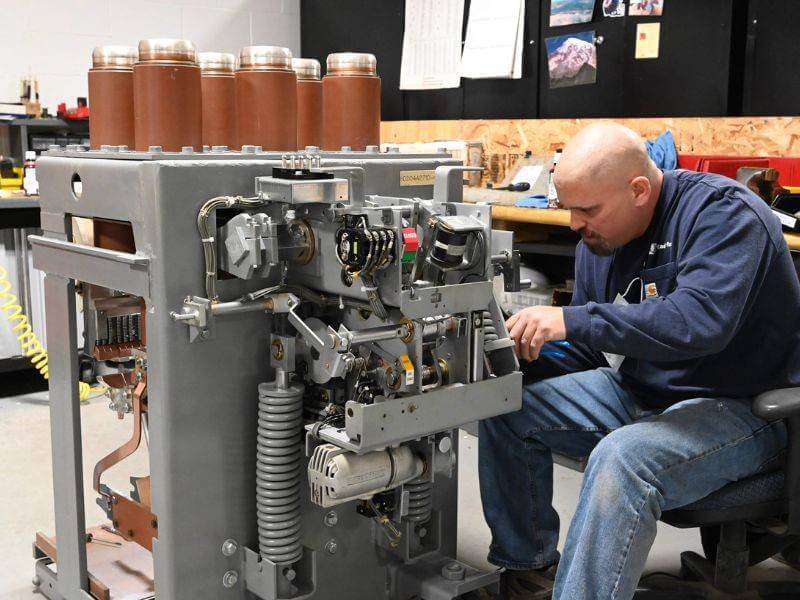
Schedule Industrial Circuit Breaker Repair Services with Quad Plus
Regular preventive maintenance and inspection of industrial circuit breakers is crucial for identifying potential issues before they escalate into major problems. Remember, when in doubt, consult qualified electrical professionals, such as our experienced Quad Plus team, to ensure the safety and integrity of your industrial circuit breakers.
Contact Quad Plus for industrial circuit repair services by certified breaker technicians.
Frequently Asked Questions
No. Industrial circuit breaker repair services require specialized training, testing equipment, and strict safety procedures. Only qualified electrical professionals should perform diagnostics or repairs.
Repair time depends on the breaker type, condition, and availability of replacement parts. Most standard repairs can be completed within hours, while extensive rebuilds may take longer.
Repeated tripping typically indicates an underlying issue such as overload, short circuit, deteriorated contacts, or a malfunctioning trip unit. A professional inspection is needed to identify the exact cause.