
Categories
Recent Posts
Why Electrical Switchgear is Critical for Industrial Safety?
September 26, 2024
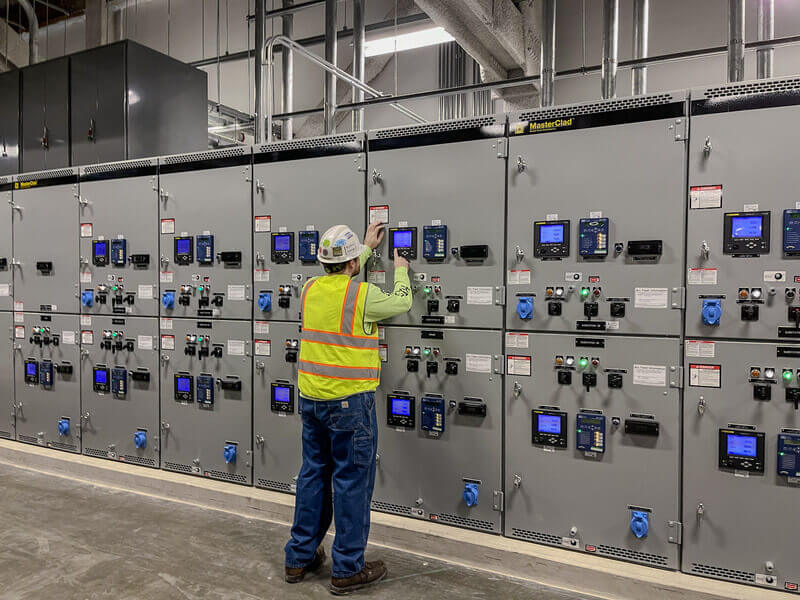
Unexpected downtime is one of the most costly frustrations for the industrial sector. In addition to lost production time, repairing the cause of the downtime can become expensive quickly. Overloads and power surges are a common source of unexpected shutdowns, maintaining electrical switchgear is an important element towards prevention.
What is Electrical Switchgear, and How Does it Function?
Switchgear has two main functions. The first is to control the flow of energy to equipment and devices, turning power on or off as needed. Switchgear can redirect power to different system parts or locations or stop the flow of power entirely in an emergency or during maintenance to prevent damage and injury.
The second function of switchgear is to regulate how much electricity is being used and where it is directed. Switchgear prevents circuits from being overloaded with too much power and ensures that sufficient power is being directed to the right equipment at the right time.
The Components of Electrical Switchgear
Switchgear comprises a series of circuit protection devices that work together to isolate and protect electrical equipment and machinery. Each component of the power distribution system performs a vital function. The key components of industrial electrical switchgear include:
- Switches. These devices move to start or stop the flow of current in a circuit. Isolator switches ensure that no current can move through the circuit. Disconnecting switches are similar to isolator switches but are used in situations that require infrequent operation. Load break switches can break current while under load and are used for switching energized circuits.
- Fuses. Fuses protect circuits when too much current is flowing. An internal strand of conductive material melts or breaks under too much current to stop the circuit.
- Relays. Relays detect faults in electrical systems and guide circuit breakers so defective components are isolated. Relays are used in a coordinated fashion to ensure that only the nearest breaker is tripped when a fault occurs.
- Circuit Breakers. These provide a similar function to fuses but can detect more fault types and can be reset once tripped.
- Lightning Arrestors. Sometimes called surge arrestors, these devices provide a low-resistance path to discharge surges caused by lightning strikes.
- Busbars. Typically made of copper or aluminum, busbars are designed to withstand high currents and temperatures.
What Are the Different Types of Switchgear?
The main categories of switchgear are high-voltage (HV), medium-voltage (MV), and low-voltage (LV). High-voltage switchgear is typically limited to utility substations and large power distribution facilities and can handle voltages above 38kV. Smaller systems, including most homes, use low-voltage switchgear rated up to 1kV.
In most industrial and commercial settings, medium-voltage switchgear rated between 1kV and 38kV is critical for the dependability of the power distribution system. It can prevent damage to equipment from short circuits and overcurrents, isolate malfunctioning machinery and devices, and regulate power distribution.
Switchgear can also be categorized by the type of insulation used:
- Air-insulated switchgear uses ambient air, providing affordable and simple options in environments not constrained by small spaces.
- Gas-insulated switchgear uses SF6 (sulfur hexafluoride) and is useful in areas with high voltage requirements and tight space constraints.
- Hybrid switchgear utilizes both air and SF6 gas to provide versatile devices suitable for many applications.
- Fluid insulation, including oil, is preferred for systems that are prone to overheating and when high dielectric strength is required.
- Solid insulation, like resins, provides high resistance and is not prone to chemical or thermal deterioration.
Why is Switchgear Important for Industrial Safety?
Switchgear is designed to withstand large power surges and unexpected overloads. To prevent widespread damage, surges are diverted, and affected areas are isolated. Switchgear acts like a shield to protect expensive electrical equipment and manufacturing machinery, reducing the need for repairs and extending the working life of equipment.
Arc-resistant switchgear provides another layer of safety to workers and equipment. An arc flash happens when current travels through air and releases a large amount of energy in the form of heat and light. An arc flash can lead to dangerous fires or explosions that can rupture panels, melt some metals, and harm nearby workers.
Arc flashing can happen inside switchgear assemblies or their enclosures. Resistant switchgear is designed to withstand high temperatures and pressure and deflect it away from workers and equipment.
Safety Standards and Compliance for Effective Switchgear Operation
Because electrical switchgear plays an important role in maintaining a safe and productive environment, adhering to all industry standards and guidelines is critical, especially when servicing and maintaining the equipment. Improper electrical safety in the workplace can cause electrical shock or burns to workers, fires and explosions from equipment, mechanical hazards, and dangerous heat buildups.
All operation and maintenance personnel should be appropriately trained in handling switchgear and responding to adverse conditions. All crew members working with or around electrical switchgear equipment should be trained on lockout/tagout procedures and the correct use of personal protective equipment (PPE) such as insulated gloves, leather boots, safety glasses, and flame-resistant clothing.
Every industrial organization is also responsible for ensuring that distribution systems are located in proper enclosures that can control moisture levels and temperature and restrict entry to only trained, authorized personnel.
How Often Should Switchgear Be Inspected or Maintained?
We recommend working with your power service partner to identify how often your switchgear should be inspected or tested. NETA (International Electrical Testing Association) provides a periodic maintenance schedule for each of your electrical assets. A visual inspection of the switchgear and the environment should be performed to check for corrosion and fluid leaks and ensure the proper environmental conditions for the equipment. Internal components of electrical switchgear should be inspected, cleaned, and lubricated.
Common electrical switchgear diagnostic tests include:
- Infrared Thermology. Infrared cameras are used to identify hot spots.
- Partial Discharge Testing. Identifies degradation of insulation before failures occur.
- Insulation Resistance Testing. Measures the resistance of insulation to current flow.
- Contact Resistance Testing. Detects issues such as loose connections, corrosion, and wear.
- Operational Tests. Verify the proper functioning of electrical and mechanical components.
More frequent testing would be warranted when equipment problems or deterioration are suspected or in environments with high reliability requirements. This comprehensive Periodic Maintenance Schedule provides specific information on testing and maintaining electrical components.
Benefits of Regular Switchgear Maintenance
The best time to discover a problem with industrial electrical switchgear is before major problems occur. Regular preventive maintenance helps ensure that critical safety equipment is properly functioning when it’s time to be used.
When potential problems are identified and addressed before they become major issues, downtime and costly repairs are minimized while the equipment’s working life is extended. Safety and reliability are critical features of every electrical system, and regular maintenance ensures consistent power flow with fewer adverse incidents.
The Importance of Proper Switchgear Enclosures
One primary function of switchgear enclosures is to protect against outside conditions and contaminants. Enclosures can be designed for indoor use or with added protection for outdoor locations. Added safety features can also be included, such as an arc-resistant design classification that will contain any arc explosion within the enclosure to prevent harm to workers and equipment.
How Modern Switchgear Enhances Efficiency & Safety
Modern electrical switchgear components have many features to enhance the operational safety and efficiency of power systems while also making them safer for maintenance personnel. For example, segregated compartments for items such as busbars, switches, and instruments can minimize the risk of arc flashing. The isolation of potential faults helps to contain issues and prevent escalation.
The increasing adoption of digital switchgear is reshaping power management and distribution. By collecting power consumption and performance data in real-time, a high degree of usage optimization allows operations to be more energy efficient.
Digital switchgear also provides smart load management by prioritizing power distribution using real-time demand, and advanced protection features can isolate faults and overloads quickly to prevent damage. Plus, remote operation of digital switchgear is not only safer for operators, but it also enhances responsiveness to changing needs.
Condition-Based Maintenance
Digital switchgear also allows industrial organizations to incorporate condition-based maintenance in addition to regular inspections and preventive maintenance performed on a schedule. Using data collected by the switchgear, potential issues can be predicted before they become apparent either visually or using electrical power testing equipment. This allows organizations to be more reliable and to address problems with greater efficiency by focusing efforts during planned maintenance periods.
Electrical Safety Rules & Regulations
Manufacturing standards ensure that all electrical switchgear equipment meets strict requirements for safe operation. OSHA provides standards for employees working with or around dangerous electrical equipment. The NFPA and ANSI/IEEE standards all contribute to the safe manufacture and operation of electrical switchgear in North America, and IEC standards ensure the same worldwide.
The Financial and Operational Benefits of Investing in Quality Switchgear
Medium voltage switchgear, the type used in most industrial environments, is designed to handle voltages from 1kV to 36kV. A key benefit is the ability of electrical switchgear to ensure reliable power distribution. By isolating faults and protecting workers and equipment, the risk of costly disruptions is minimized.
The smaller size of medium voltage switchgear takes up minimal space and is highly customizable to meet demanding and specific requirements. Options can include remote monitoring, smart control systems, and advanced metering to provide better efficiency and overall performance of the power system.
The Future of Safety and Reliability with Switchgear
As with most industrial electrical components, integration with smart technology and IoT devices is already being used in some installations, with even more on the horizon. Innovations that allow for better monitoring of devices and predictive maintenance are already hitting the market, and increasing adaptability to changing demands is delivering greater efficiency for manufacturers and more.
At Quad Plus, our goal is to help you achieve a long working life for your major industrial and manufacturing equipment. That means performing regular preventive maintenance and retrofitting old or outdated equipment with new technology to enjoy its benefits without investing in all new machinery and equipment.
To learn more about improving your operation’s efficiency and safety with switchgear services, smart retrofits, and expert maintenance, call Quad Plus today.