
Categories
Recent Posts
Air Circuit Breakers
January 22, 2026
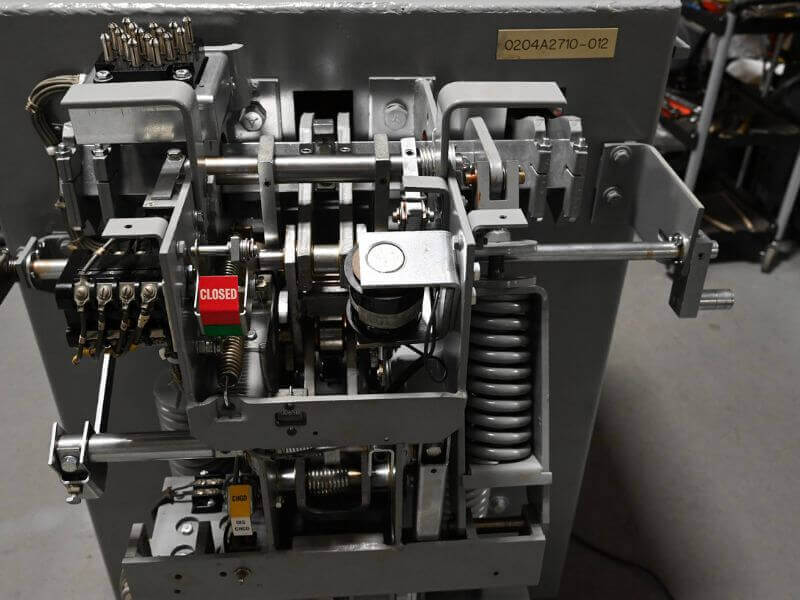
All circuit breakers are designed to stop the flow of electricity in response to certain triggers such as an overcurrent or short circuit. They work by using two contacts that separate when triggered to stop electricity and protect people and equipment from harm.
Air circuit breakers (ACBs) and vacuum circuit breakers (VCBs) are the most common types for high-voltage applications. When these types of breakers are tripped, the contacts separate and create an arc which is then eliminated safely by the breaker.
Reliable circuit protection is critical in industrial and manufacturing environments with high-voltage systems. Let’s take a look at how air circuit breakers work and what make them crucial for high-voltage industrial applications.
What is an Air Circuit Breaker?
All circuit breakers are designed to stop the flow of electricity in response to certain triggers such as an overcurrent or short circuit. They work by using two contacts that separate when triggered to stop electricity and protect people and equipment from harm.
An air circuit breaker has several parts that work together to safely interrupt electrical currents. When the contacts inside an air circuit breaker begin to separate and an arc (a high-temperature discharge) forms, a blast valve opens. This lets pressurized air flow through special channels called arc chutes. The pressurized air pushes the arc, forcing it to detach from the contacts.
Next, the air directs the arc toward arcing probes and rings. These are conductive components that help pull the arc away from the main contacts. As the contacts move farther apart, these probes and coils move closer together, allowing them to attract and guide the arc.
Finally, the arc is guided through the chutes toward an arcing electrode. As it moves through the chutes, the arc stretches and eventually breaks completely, eliminating it from the system.
Different Types of Air Circuit Breakers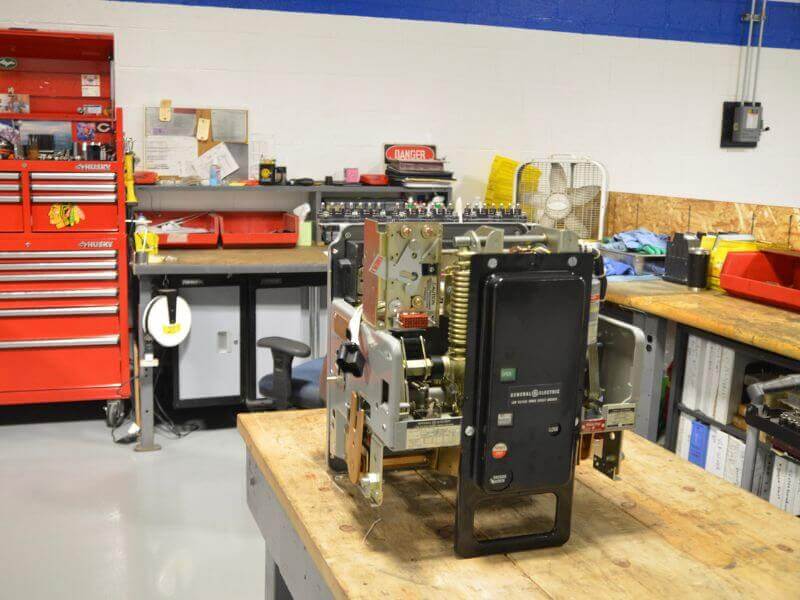
Air circuit breakers come in several types, each designed for specific applications and operational needs.
- Plain Break Type ACBs. This type is the most basic form of air circuit breaker, where the arc is extinguished in open air without any special arc-extinguishing devices. Plain break ACBs are typically used in lower voltage applications where fault currents are not extremely high.While effective for simpler systems, they are less common in modern installations due to limited arc control, making them less suitable for high-voltage or high-current applications.
- Magnetic Blowout ACBs. Magnetic blowout ACBs use magnetic fields to control and move the arc during fault conditions. When a fault occurs, a magnetic coil within the breaker generates a magnetic field that “blows” the arc away from the contacts and into an arc chute, where it can be safely extinguished. This type of air circuit breaker is ideal for applications requiring rapid arc suppression, as the magnetic force quickly pulls the arc out of the path of current flow, preventing damage to the breaker and the circuit.
- Air Chute ACBs. Also known as arc chute ACBs, this type includes arc chutes to contain and extinguish the arc. When an arc forms, it is directed into the arc chute, where it is divided and cooled, effectively quenching it. Air chute ACBs are common in high-voltage applications, as they provide more effective arc control and reduce the energy released during a fault. This design enhances the ACB’s capacity to handle high fault currents safely and is especially useful in industrial settings where large surges are likely.
- Draw-Out Type ACBs. Draw-out type air circuit breakers are designed for easy installation and maintenance, as they can be “drawn out” from their mounting framework for inspection or replacement. These breakers are often used in switchgear applications, where rapid access to circuit breakers is necessary for maintenance and troubleshooting.
The Role of ACBs in High-Voltage Industrial Settings
In high-voltage industrial and manufacturing environments, the risks associated with electrical faults are significant. The primary role of an air circuit breaker is to protect workers from injuries and to prevent damage to industrial machinery and equipment.
Air circuit breakers are designed to work quickly and without manual intervention. They feature advanced trip units that detect faults nearly instantly when abnormal conditions are detected. By isolating faults quickly, ACBs prevent an escalation of issues that could lead to serious damage or dangerous conditions.
When a fault occurs, the ACB immediately disconnects the specific section experiencing the fault. By isolating only the faulted area, ACBs ensure that the rest of the power system continues operating smoothly. This containment ability is essential for large industrial plants, where multiple processes rely on continuous electricity.
When high currents are interrupted, dangerous arcs often form. Air circuit breakers use arc chutes to control the movement of an arc and blast valves to extinguish the arc safely to reduce the risk of a dangerous arc flash.
Controlled current limiting is another safety feature of ACBs. By limiting the peak fault current that flows through a circuit, downstream equipment is protected from sudden surges. ACBs can also be used to isolate sections of a system to allow for maintenance or circuit breaker repairs without disrupting power to the entire operation.
 Beyond Safety: Key Benefits of Using Air Circuit Breakers in High-Voltage Systems
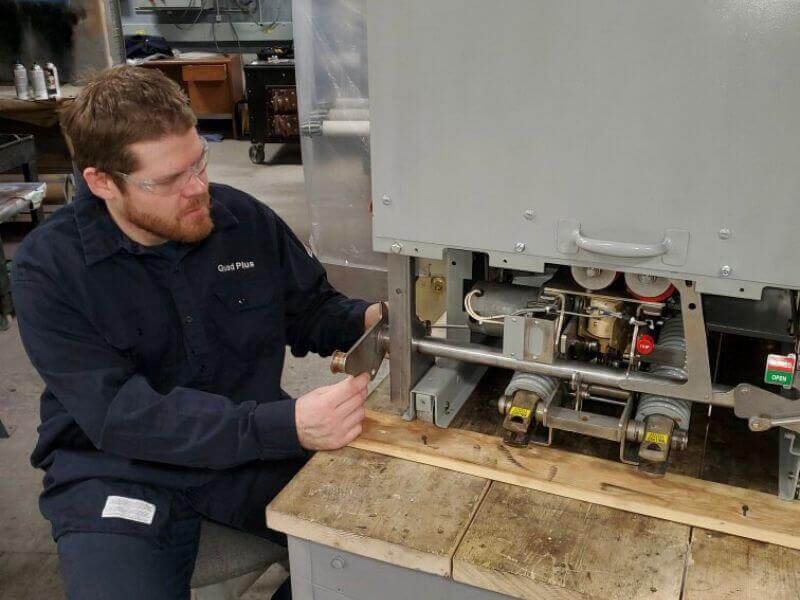
One of the main advantages of air circuit breakers is their durability, which results in a longer lifespan and reduced maintenance requirements. ACBs are built to withstand extreme electrical stress, making them reliable for repeated operation over time.
Their design includes high-quality materials that endure high voltages and heavy usage without frequent replacement or repair. This durability means that industrial facilities can rely on ACBs for continuous protection without the need for regular maintenance, saving both time and money. Lower maintenance needs also reduce personnel exposure to high-risk areas, further contributing to a safer work environment.
Operational efficiency is another major benefit of using ACBs in industrial applications. By automatically detecting and isolating faults, ACBs prevent unexpected shutdowns and minimize the impact of electrical issues on the overall system. This rapid fault isolation is essential in large-scale operations where unplanned downtime can be costly and disruptive.
Common Issues with Air Circuit Breakers: Challenges and Limitations
Air circuit breakers (ACBs) often come with a high initial cost, which can be a significant investment for industrial facilities. The advanced technology and robust construction of ACBs make them more expensive than other types of circuit breakers.
However, this upfront cost can be seen as an investment in long-term reliability and safety, as ACBs are built to withstand high electrical stress and provide exceptional protection. In the long run, their durability and effectiveness in preventing costly electrical faults and reducing downtime outweigh the initial costs, making ACBs a cost-effective choice for critical industrial applications.
Space Requirements
Another limitation of ACBs is their considerable space requirements, which can be challenging, particularly in retrofit installations. ACBs are often larger than other circuit breakers due to the mechanisms needed to handle high voltages and control arc formation safely.
In older facilities or those with limited installation space, accommodating ACBs may require additional modifications or adjustments to the existing electrical infrastructure. For some facilities, this spatial requirement can add complexity and cost, especially if space is at a premium or modifications impact other operations.
Maintenance and Durability
While ACBs are designed for durability and require less frequent maintenance than some alternatives, they still need regular inspection, especially in high-stress environments. Industrial settings can expose circuit breakers to significant dust, moisture, vibration, and heat, which may affect performance over time.
Periodic inspections and maintenance are necessary to ensure the breaker remains in optimal condition and can handle faults effectively when they arise. This maintenance typically includes testing the trip mechanisms, cleaning, and ensuring connections are secure, which helps prolong the ACB’s life and maintain its reliability.
 Air Circuit Breakers vs. Vacuum Circuit Breakers
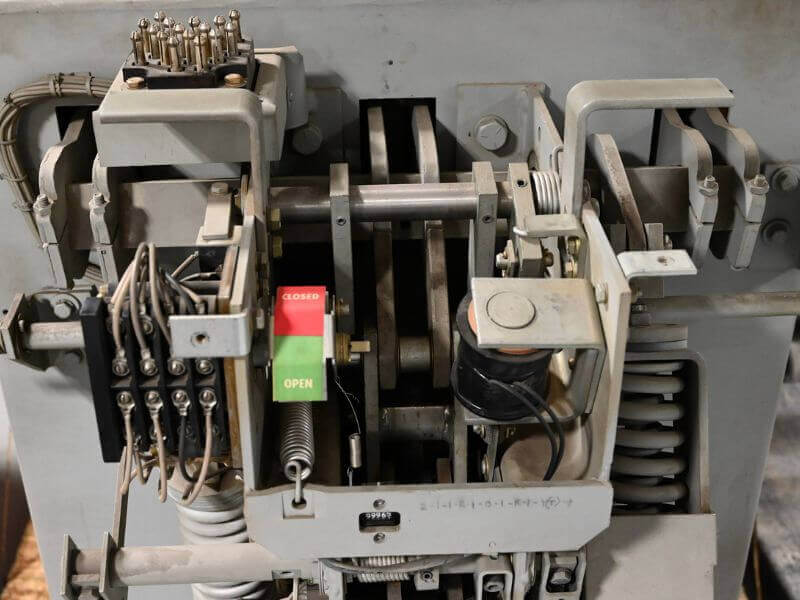
Air circuit breakers and vacuum circuit breakers are both widely used in industrial and high-voltage applications, but they function in distinct ways and serve different purposes depending on the specific requirements of a facility.
How Each Type Functions
ACBs use air as the medium to extinguish electrical arcs, relying on arc chutes and compressed air to manage and dissipate the arc generated when the breaker operates. VCBs utilize a vacuum as the arc-extinguishing medium, effectively eliminating the arc by creating a vacuum within sealed chambers. This vacuum isolates the arc, preventing it from persisting and allowing for safe interruption of the current flow. This makes ACBs ideal for applications where high fault current interruption capability is needed, as they can handle large power surges safely and consistently.
Durability & Maintenance
ACBs are durable and have a high breaking capacity, which means they can safely handle the high energy associated with fault conditions. However, they tend to be larger and require more maintenance than VCBs, mainly because the air-based arc-extinguishing mechanism produces wear on the internal components over time.
VCBs, in contrast, require less maintenance due to the vacuum medium, which generates minimal wear and does not degrade over repeated operations. This makes VCBs particularly advantageous in systems where space and maintenance constraints are significant factors, as their smaller size and lower maintenance needs make them easier to install and manage.
Operational Efficiency & Lifespan
VCBs generally have a longer operational lifespan because their vacuum-based mechanism is less affected by frequent switching or high-voltage operation. This durability can make VCBs more cost-effective over time, particularly in applications with repetitive switching. However, ACBs are more resilient in extreme fault conditions and provide better performance in environments where high fault levels are common.
While both ACBs and VCBs are essential for circuit protection, ACBs are often favored in heavy-duty, high-current settings, while VCBs are preferred in smaller, high-frequency applications where space and minimal maintenance are priorities.
 The Future of ACBs in High-Voltage Industrial Applications
Technological advancements in air circuit breakers are driving significant improvements in their performance, safety, and energy efficiency.
Advanced Arc-Extinguising Mechanisms
One area of focus is the development of advanced arc-extinguishing mechanisms, which aim to manage and suppress arcs more effectively and safely. These mechanisms include innovative arc chutes and magnetic blowout systems that direct and extinguish arcs faster than traditional methods, reducing the energy released during faults and enhancing safety.
Additionally, some ACBs now use compressed air or gas-blast techniques, further minimizing arc formation and allowing breakers to handle even higher voltage levels with reduced wear. These advancements make ACBs safer for both personnel and equipment while extending their operational life, which is particularly beneficial in high-stress, high-voltage environments.
Control System Integration
Another major innovation is the integration of smart technology into ACBs, allowing them to be part of a larger, intelligent power management system. Modern ACBs equipped with IoT capabilities and digital sensors can communicate real-time data on circuit conditions, alerting operators to potential issues before they escalate.
These “smart” ACBs can perform predictive diagnostics, monitor performance, and optimize energy consumption, contributing to better overall efficiency. By integrating with control systems, smart ACBs can provide insights into power usage trends and allow for remote operation and circuit breaker testing, making maintenance more efficient and responsive. This level of integration is especially valuable in industries where high-voltage systems need constant monitoring and rapid response capabilities.
Improved Safety
The demand for safety and efficiency in industrial settings is rising, making ACBs more essential than ever. As industries grow and adopt increasingly complex high-voltage systems, the need for reliable protection against electrical faults intensifies. ACBs play a crucial role in ensuring these systems operate safely, automatically isolating faults and preventing dangerous situations like fires and electrical arcs.
With regulations and standards continuously evolving, there is a stronger emphasis on implementing circuit protection devices that can meet higher safety requirements, making ACBs indispensable. Their ability to handle high fault currents while protecting both personnel and equipment supports a safer work environment, which is a priority in industries where the risks from electrical faults are significant.
Ensuring Operational Safety & Efficiency with Air Circuit Breakers
ACBs are critical for ensuring safety, reliability, and operational efficiency in both low- and high-voltage industrial environments. Their advanced arc-extinguishing mechanisms and rapid fault isolation capabilities protect both personnel and equipment from dangerous electrical faults.
ACBs offer long-term benefits through reduced maintenance, enhanced durability, and integration with smart technologies. From basic applications to complex high-voltage systems, ACBs support industrial facilities by maintaining consistent power flow and reducing downtime. As industries evolve, ACBs remain vital for safe and effective power management.
For more insights or to start your project, contact the experts at Quad Plus today to explore the best air circuit breaker solutions for your facility. Their knowledgeable team can help you choose and implement the right protection strategies for your operation.
Frequently Asked Questions
Air Circuit Breakers (ACBs) should generally be inspected and maintained at least once a year to ensure optimal performance and safety. However, the exact frequency depends on the specific operational environment, usage intensity, and the criticality of the equipment protected by the ACB. For example, in high-stress industrial environments where ACBs handle frequent switching or are exposed to dust, moisture, or other environmental factors, more frequent maintenance—such as every six months—may be advisable.
Routine maintenance and inspection tasks for ACBs include:
- Visual Inspections: Regularly check for any visible signs of wear, corrosion, or damage to contacts, arc chutes, and other air circuit breaker mechanisms.
- Cleaning: Dust and debris should be removed to prevent contamination that could impact performance.
- Lubrication: Moving parts should be lubricated as per the manufacturer’s recommendations to ensure smooth operation.
- Electrical Testing: Periodic testing of insulation resistance, contact resistance, and trip settings to confirm that the breaker will perform as expected during a fault.
- Functional Testing: Manually or automatically test the ACB’s operation to ensure the trip mechanism is working correctly.
For critical systems, predictive maintenance strategies using condition-monitoring technologies like thermal imaging and vibration analysis may also be applied to detect signs of wear or degradation before they become serious issues.
An air circuit breaker provides protection in high-voltage environments by quickly detecting and interrupting fault currents, such as overloads and short circuits, to prevent damage.
When a fault occurs, the ACB’s contacts separate, creating an arc. Arc chutes and pressurized air within the ACB extinguish this arc, ensuring safe disconnection. This rapid isolation prevents equipment damage, fire risks, and potential injury to personnel.
ACBs also include trip units that automatically trigger disconnection under unsafe conditions, making them reliable for maintaining continuous operation and safety in demanding high-voltage applications where electrical faults could have serious consequences.
Yes, air circuit breakers can be used in both low and high-voltage applications, though they are more commonly employed in medium- and high-voltage settings. In low-voltage applications, ACBs protect electrical circuits by quickly disconnecting in case of faults like overloads and short circuits.
For high-voltage applications, ACBs are designed with advanced arc-extinguishing features, such as arc chutes and air blasts, to safely manage larger fault currents. While ACBs are versatile, their robust design and arc-handling capabilities make them especially suitable for industrial, high-voltage environments where rapid fault isolation and enhanced safety are critical for equipment and personnel protection.