
Categories
Recent Posts
Benefits of Partnering with a Professional Engineering Company
June 16, 2025
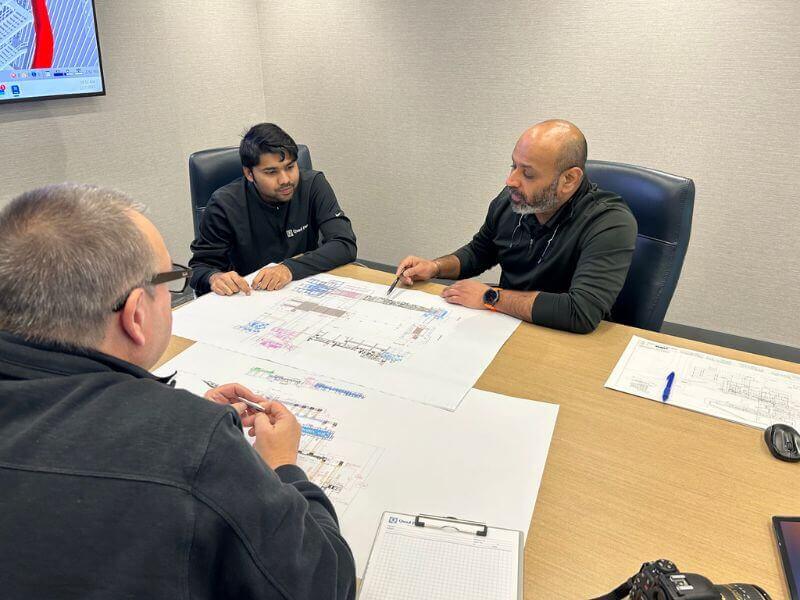
Whether your industrial engineering project is in the design, planning, building, or finishing stage, a professional engineering company can be a vital contributor to the project’s success.
As your operation grows, partnering with a professional engineering company ensures consistency and control across every stage. Whether expanding your facility, designing a new product, or revamping processes to make them more efficient, professional engineers will help ensure your projects are completed on time and on budget.
Let’s get into the details of the specific benefits a professional engineering company brings to industrial projects.
Why Professional Engineering Company Expertise is Crucial for Success?
Quad Plus has licensed professional engineers with the experience to help you. Using mathematics, science, and technical knowledge, they identify problems in a process or project that may have otherwise gone unnoticed and analyze the information to find solutions. A professional engineering company will also put its creativity to work when considering limitations imposed by regulations, safety, cost, and practicality.
Professional engineering services also use a combination of skills and imagination to design and improve existing processes and structures. Their expertise is instrumental in streamlining operations and applying innovative solutions to reduce production costs and time. They help bridge the gap between new technologies, computer-integrated manufacturing systems, and aging industrial machinery.
Industrial engineering companies come in a variety of specialties. If you’re working on an industrial project, chances are there’s an engineer whose specialty can help. Some of the major focuses of engineers include:
- Civil Engineering: analyzing and developing infrastructure projects such as bridges, water management, roads, and tunnels.
- Mechanical Engineering: designing and testing machinery, equipment, engines, and turbines.
- Industrial Engineering: developing and implementing efficiency strategies for large-scale systems.
- Structural Engineering: analyzing, designing, reviewing construction plans, and overseeing construction projects.
- Electrical Engineering: all aspects of electronic parts and components.
- Environmental Engineering: addressing global environmental issues, including energy efficiency and pollution.
- Aerospace Engineering: developing and testing equipment and products, ensuring quality standards.
- Transportation Engineering: planning and designing the construction of roads, airports, subways, and trains.
Industrial engineering companies may also focus on information technology, automotive, marine, network, chemical, pharmaceutical, textile, biochemical, systems, supply chain, and manufacturing.
Strategic Decision-Making Backed by Industry Expertise
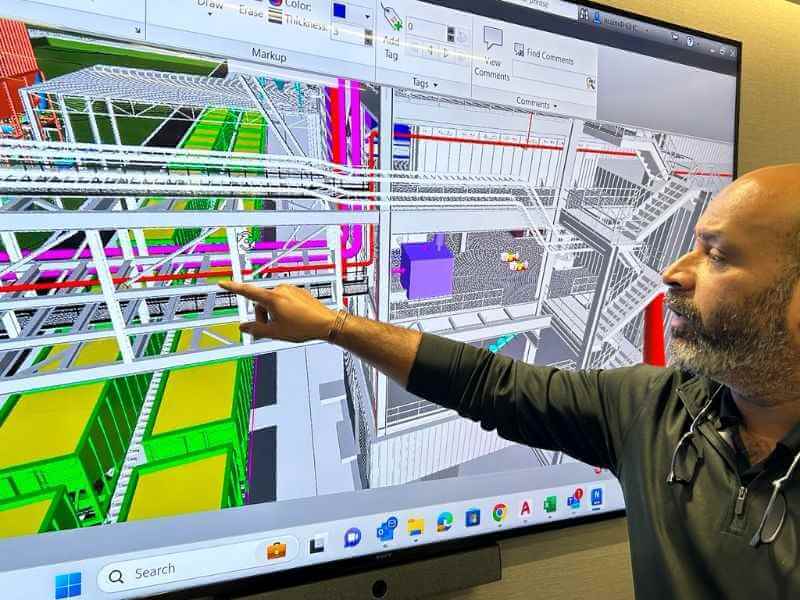
Quad Plus has licensed engineers with accredited project management certificates who have run multi-million dollar projects. Industrial engineering consulting projects can be kept on track by establishing smart objectives and prioritizing risk assessment and mitigation. Strategic thinking allows for difficult decisions to be made using data and facts following these steps:
- Assess Current Needs. Inspecting and recording production capacity, logistics, and technology requirements, finding and describing challenges and goals.
- Collect & Analyze Data. Relevant data includes current production metrics, quality control reports, market trends, and financial performance indicators.
- Risk Assessment. Evaluating potential hazards and other adverse outcomes associated with different decisions and external risks such as market volatility, technology changes, and operation disruptions.
By including a professional engineering company with experience in the industry and specialty associated with a project, they can use their industry expertise and knowledge to anticipate and predict various outcomes based on the data collected.
Then, different solutions can be presented to address the company’s current needs. Decisions can be made with more confidence and security, and contingency plans can be developed to mitigate the potential harm of any solutions that are chosen and implemented.
The final step of the process is to evaluate the outcomes and compare them to the initial goals and challenges to assess the effectiveness of a solution. This information can then be used in future planning and decision-making by capitalizing on successes and making adjustments based on any failures or problems encountered.
Achieving Cost Efficiency through Professional Engineering Services
A professional engineering company must weigh the tradeoffs between performance and quality to strike the right balance when improving process cost efficiency. In an industrial environment, this may start by streamlining production processes by identifying and eliminating bottlenecks and other inefficiencies.
Optimizing inventory management and supply chain efficiency are other ways to improve cost efficiency. Ensuring a smooth flow of materials through production and into customers’ hands can reduce operating and storage costs, along with minimizing waste such as spoilage and obsolescence.
Implementing automated solutions will also boost the efficiency of an operation. A professional engineering company will review your existing processes, determine their primary functions, and then create ways to implement automation technology to execute these functions. The result is a boost in cost efficiency by reducing labor costs, improving quality, and increasing production rates.
How do professional engineers contribute to the sustainability of industrial projects?
Improving sustainability is another efficiency-boosting measure. When a professional engineering company focuses on minimizing waste, using renewable resources, cutting pollution, and enhancing the health and safety of the environment and people, sustainable solutions can be put in motion.
Sustainable manufacturing also helps balance the bottom line by reaching new customers who prefer working with sustainable operations. It delivers a competitive advantage while building the company’s reputation and trust in the industry.
Risk Reduction and Compliance Assurance with Professional Engineers
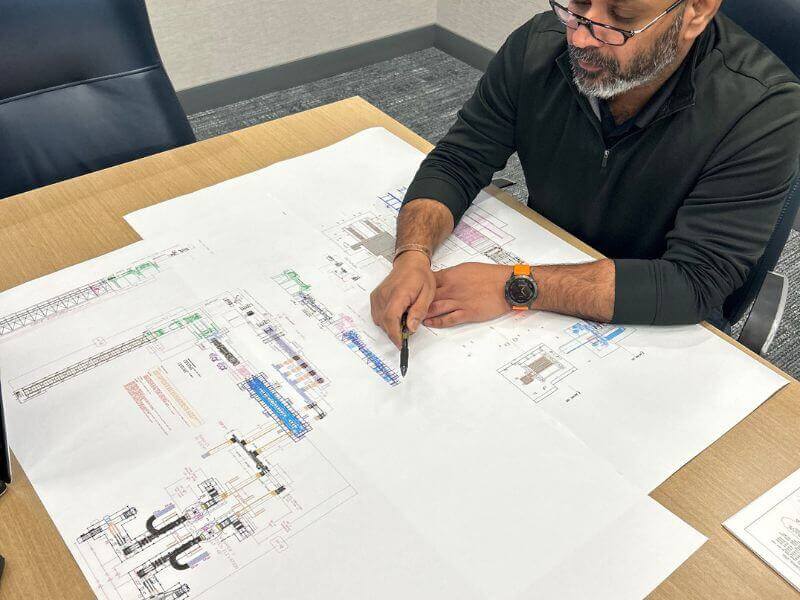
Risks come in many forms, including financial and safety. Risk reduction in professional engineering seeks to reduce the impact, severity, or probability of an adverse event. Risks must first be identified and then analyzed for probability and associated consequences.
Risks must also be compared to thresholds for acceptance, or when a company accepts the potential consequences of a risk. For example, financial risks must often be taken when expanding or developing new products. There are no guarantees of success, but risks can be reduced or contingency plans developed.
On the other hand, the acceptance threshold for safety risks is exceptionally slim, and most in the industrial sector will accept very little risk regarding the safety of their crew. Industrial engineering consulting companies ensure that all standards and regulations are rigorously followed.
How do engineering companies ensure compliance with industrial regulations?
A professional engineering company is often responsible for developing and implementing policies and standard procedures within an organization to ensure compliance with all industry regulations. These regulations can include everything from building codes to OSHA safety standards to EPA laws and executive orders. Tracking and reporting violations and regularly reviewing processes and procedures for compliance are also critical.
Developing the knowledge and expertise of workers is another meaningful way that a professional engineering company ensures compliance with industrial regulations. By providing information, documentation, and training, everyone can be responsible for following protocols and standards and creating a culture of safety by encouraging their teammates to do the same.
Enhancing Safety Standards with Expert Engineering Oversight
Safety standards and regulations are the foundation of protecting the welfare of workers, customers, and the public. A professional engineering company will work to enhance safety and standards to further reduce risks to people and property with these common strategies.
- Comprehensive Risk Assessments. Identifying and analyzing risks is often a project of their own so that robust mitigation strategies can be developed. The goal is to implement proactive measures whenever possible to prevent accidents and adverse events. Machine safety assessments provided by a professional industrial engineering company are also an essential practice in the manufacturing industry.
- Strict Safety Protocols. These protocols can include complete personal protective equipment (PPE) kits, regular training and practice exercises, safety audits, and inspections.
- Advanced Technology. Modern monitoring equipment like drones and sensors allow for real-time data collection and analysis. This allows anomalies to be detected early and action taken to prevent problems. Virtual reality technology allows for advanced training exercises and realistic experience in hazardous conditions.
- Collaboration. Sharing knowledge with other industry professionals and organizations has always been a foundational principle of the engineering profession. This aids in developing and enforcing industry standards and best practices to improve safety in every industry.
How Industrial Engineering Improves Flexibility and Scalability
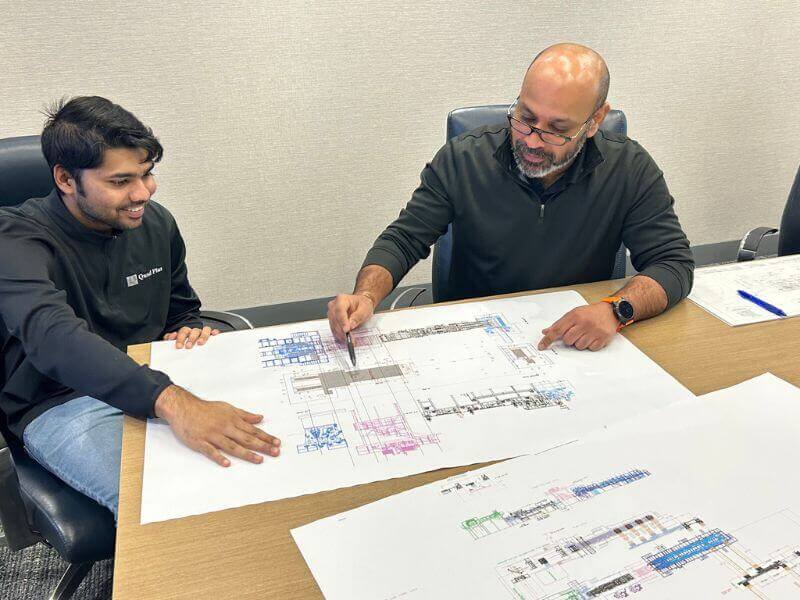
Changing market conditions and production demands call for scalable solutions that help your company adapt and take advantage of new opportunities more effectively. In manufacturing, having scalable plans in place or incorporating them into new designs will help companies respond to demands without sacrificing performance or cost-effectiveness.
Professional engineers work with your existing technology and equipment to develop long-term plans for growth and improvement that keep your bottom line in mind. Upgrades and new equipment installations can be rolled out incrementally, for example, to get the most from aging equipment or to prepare for major changes with minimal disruption to current production.
A professional engineering company can also assist with project coordination. This includes aspects such as capital planning, engineering documentation, system design, and installation. By supplying budgets and schedules, recommendations for equipment, and design drawings and providing the management of fabrication and installation projects, manufacturers can enjoy more favorable outcomes.
Building Long-Term Partnerships for Ongoing Industrial Growth
Professional engineering and project coordination can make the difference between a successful project with a positive return on investment and a project that simply gets done. When choosing a professional industrial engineering company, you need to know that you have a partner who is as invested in your outcomes as you are.
At Quad Plus, we aim to give you the leading edge in today’s tough, competitive environment. No matter the size of your industrial engineering project, our multi-disciplined professional engineers specialize in Mechanical & Piping Engineering, Civil & Structural Engineering, and Electrical & Controls Engineering.
Partnering with a professional engineering company like Quad Plus provides long-term value across every phase of your industrial project. We have the experience you need to keep your project on schedule and on budget. Talk to a Quad Plus engineer today.