
Categories
Recent Posts
Benefits of Control Systems Integration for Manufacturing Efficiency
December 26, 2024
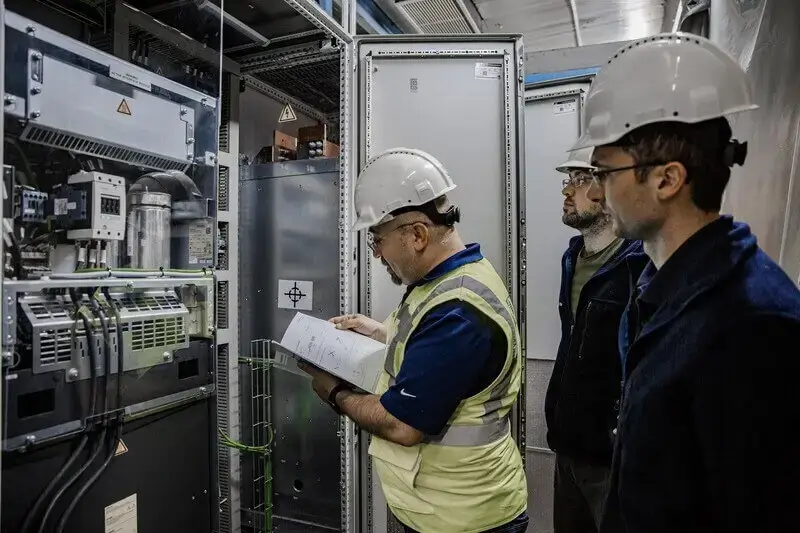
Control systems integration is more than just connecting various systems to work together. It’s about coordinating and synchronizing your operation’s systems to optimize performance, reduce costs, and improve productivity.
New technology offers a seemingly endless supply of opportunities to improve and upgrade manufacturing systems. Still, these opportunities can only be taken advantage of when integrated into your existing environment, including legacy systems.
What is Control Systems Integration?
In manufacturing and industrial operations, control systems integration means bringing together multiple digital automation systems into a consolidated, unified system. It eliminates islands of automation and operational silos that were common when digitizing and automating machinery was first embraced.
Initially, individual operations or machines were integrated with digital automation technology, and each operated as a stand-alone device. Data was collected and processed from each system, but operation-wide data processing meant manually collating the data from each process, which was often slow and open to errors.
Integrating these control systems creates an intelligent network of processes and machines and the real-time data collection and processing to go along with it. Manufacturing plants and industrial operations become easier to manage, maintain, upgrade, and scale up with control systems integration.
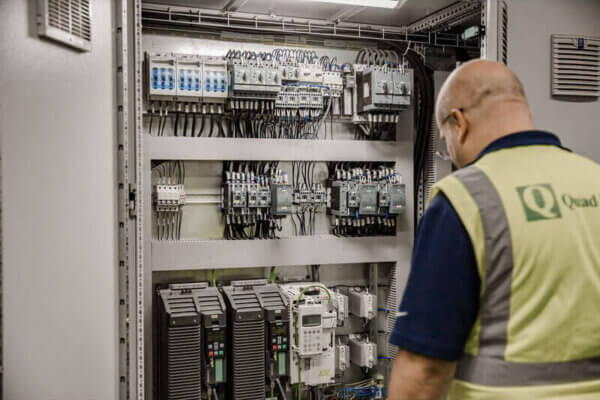
The Top 10 Benefits of Seamless Integration in Your Factory
Control systems integration delivers significant advantages to manufacturing and industrial processes. When your operation’s machinery, software, and crew are all working together seamlessly, you’ll enjoy these benefits:
1. Increased Productivity. When workflows are streamlined and repetitive tasks are automated, workers can spend their time on more important aspects of their jobs.
2. Reduced Costs. Reducing manual and redundant processes cuts the cost of operations, including labor, maintenance, and materials.
3. Improved Data Accuracy. Integrated systems seamlessly share data across platforms to minimize errors caused by manual data entry.
4. Better Collaboration. Better data collection means better access to information across departments, making it easier for them to work together to solve problems.
5. Quicker Decision Making. With fast access to accurate data from various systems across your organization, identifying issues and making decisions becomes faster and easier.
6. Streamlined Operations. Synchronized operations help eliminate production bottlenecks and reduce the need for operators to switch between multiple systems.
7. Upgraded Quality Control. Integrated monitoring and data collection systems allow quality issues to be identified and corrected early for better outcomes and less waste.
8. Increased Customer Satisfaction. Every customer benefits from fewer quality control issues and faster production times.
9. Easier Scalability. When it’s time to adapt to changing production demands, you’ll have all the data you need to predict future demands and integrate new technologies.
10. Improved Safety. Automated safety features help reduce human error, and eliminiating repetitive processes reduces the possibility of injury from repetitive movements.
Why Integrating Control Systems is a Game-Changer for Manufacturers
Control systems integration is a game-changer for manufacturers because it allows for a holistic view of production processes, which can lead to superior optimization of the entire operation. Rather than relying on collating information from multiple systems, often in different formats and with different data points collected, information can be collected about the entire system.
Integrated control systems also allow for the latest technologies to be leveraged to provide real-time data collection, monitoring, and analysis to deliver precise control over your critical processes and predict when maintenance will be necessary on your equipment.
How Better Integration Improves Real-Time Monitoring and Data Sharing
Data integration gives manufacturers a strategic advantage over the competition as it drives efficiency and agility. By automatically collecting and managing data from sources across your operation, data can be used more quickly and effectively.
To reap these benefits of real-time monitoring and data sharing, manufacturers must collect data from enough sources, including machinery, supply chains, workers, and even customers. However, collection is only the beginning as independent systems collect different data points and use different formats that must be collated.
With control systems integration, this data can be collected together across all platforms so it can be seen in its entirety, and different data points can be easily compared to each other, as well as historical information and future projections.
Cutting Downtime and Boosting Productivity with Integrated Systems
Manufacturing machines and automated systems have relied on manual calibration to work effectively. Algorithms had to be manually calculated or created with computer software and then manually synchronized across systems. Any disruptions or changes to production could create cascading problems down the line.
Control systems integration ensures that components and processes work harmoniously and allow for small changes to be made and automatically accommodated down the line. What this means is more consistent performance from your operations. Projections are easier to calculate and meet, breakdowns can be predicted, and maintenance scheduled rather than encountered.
Control systems integration can significantly reduce unexpected downtime and allow maintenance downtime to be planned during off-peak hours. Production runs can be tighter, and inefficiencies can be minimized. The result is more time up and running at peak efficiency.
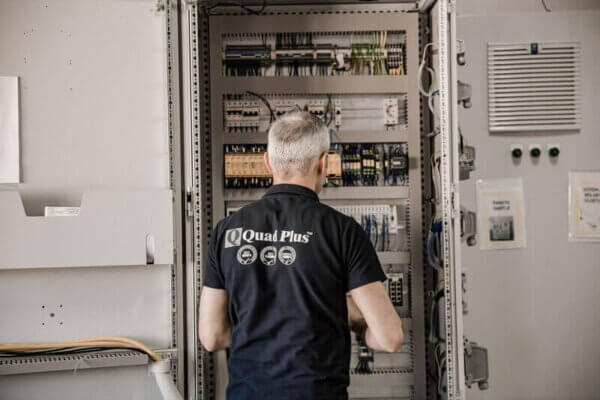
Making Your Operations Safer with Integrated Control Systems
Control systems integration in manufacturing boost operational safety in several ways. First, by automating processes, the likelihood of human errors leading to accidents and injuries is significantly reduced. Second, by optimizing conditions, workers can avoid unsafe environments as much as possible.
Integrated control systems also detect faults and other hazards more quickly, allowing for fast emergency response through automated systems or worker response. Control systems integration also allows for automated and engineered safety features, such as muting zones, rather than relying on manual lockout tagout (LOTO) procedures.
Planning for the Future: Scaling Up with Seamless Integration
Whether you’re expanding your operations, scaling up your output potential, or implementing new technology into your existing structures, seamless control systems integration makes scaling up less complicated and more successful for manufacturers.
Scaling up your operations means optimizing your company’s people, processes, and technology and accurate historical data is critical for effective planning and decision-making. High-quality data collected from integrated systems helps to identify trends, forecast future demand, and make operational decisions to accommodate those demands.
High quality data also helps to accurately forecast the working life of major equipment and machines so upgrades, retrofits, and new installations can be perfectly timed to make the most of these expensive investments.
Finding the Right Partner to Bring Your Systems Together
Whether you’re seeking to design a new installation for your large-scale industrial processes or retrofit legacy equipment with new technology, you need a partner that provides fully integrated solutions throughout the process, including design, development, implementation, and commissioning.
The control system integrators at Quad Plus specialize in this process and understand your operation’s specific needs. You’ll have expert assistance choosing the best hardware and software components and programming and configuring everything for seamless operation.
Our control systems integration specialists are ready to tackle every processing application, including stacking and de-stacking, web tension control, alignment and orientation detection and correction, air handling, and recipe-based batching and coatings application.
The Quad Plus control systems integration team also has more combined experience in every industry and every environment. That means our experts have hands-on knowledge of legacy systems and obsolete components, so we know what must be updated and what can be integrated with new technology to save you money.
We also deliver onsite support during the startup process of your integrated system. The engineers who designed your systems will complete the commissioning process and provide ongoing support to ensure your system stays up and running.
Contact a Quad Plus System Integrator Now!
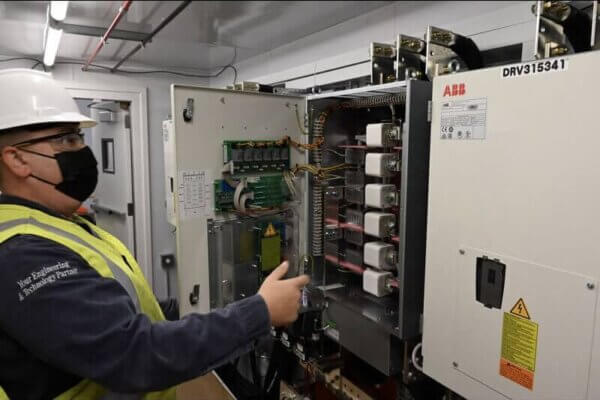
Finding a Partner Who Specializes in Your Industry
Optimizing processes means having a deep understanding of how machines and technology are used in various industries and applications. These are a few of the industries that Quad Plus control systems integration team specializes in:
- Rubber & Plastics. Our system integrators have decades of experience in rubber and plastic sheet roofing, tires, and every sector of the industry, no matter what stage of system integration you are in
- Oil & Gas. Our expertise includes both domestic and international standards for the design and construction of new equipment and the retrofit of obsolete systems. We support all aspects of the industry, including drilling, well completion, and land-based and offshore applications.
- Metals. From tension control and line optimization to slitting, blanking lines, and tube mills, you need system integrators who know your equipment and your production goals.
- Marine. Shipboard equipment requirements are continually changing to meet increasingly demanding standards of efficiency, safety, and environmental impact. We support the latest technology in marine propulsion, material transfer, electrical winches, and hoists.
- Converting. Our engineering and service team has expertise in every market and technology, including tension and motion control technology, line optimization and speed increases, and every step of the converting process from coating and laminating to extrusion, slitting, and winding.
Frequently Asked Questions
The four main benefits of system integration include increased productivity, reduced costs, better quality control, and a safer work environment. Manufacturers who embrace integrated technologies can enjoy more informed decision-making, a reduction in unexpected downtime, scalable operations, and a boost in customer satisfaction.
Control system integrators use their engineering and information technology knowledge and experience to design and implement control systems to automate manufacturing processes and industrial applications. Automation technology leads to lower costs, higher production, and less energy usage.
Control systems integration is a strategy to harmonize industrial and manufacturing operations across various processes to ensure seamless operation and real-time data collection and processing.
An integrated system is a collection of systems that are digitally connected to allow information to move back and forth between them. The integrated systems work as one. They are important because they bring together disconnected systems into a single system to improve efficiency and time.
Control system retrofitting involves updating the components of a system or machine to integrate new technologies and features rather than replacing the entire machine. The result is an increase in the functionality of the machine at a reduced cost. Retrofitting can be the best option when an existing system is stable but needs to be updated to meet the current standards or efficiency requirements of the system.