Case Study:
Troubleshooting Masterdrive System: DC Bus Voltage Dropping
Newspaper Printing Company Experiencing Faults When Running at Line Speed
Objective
Troubleshoot faulting Masterdrive system.
Solutions
- Swap existing PPC board with customer’s spare.
- Removed capacitor bank for repair at our lab.
- Removed SCRs for testing and possible replacement.
- Discussed upgrade options for equipment nearing 25 years old.
- Reviewed preventive maintenance schedules for drive cabinets.
Results and Benefits
- Identified the source of equipment faults and began repairs.
- Uncovered the need for upgrades for unsupported equipment so the customer can pursue upgrades before a catastrophic failure.
- Helped the customer understand how to get a longer working life from their equipment through regular preventive maintenance.
Background
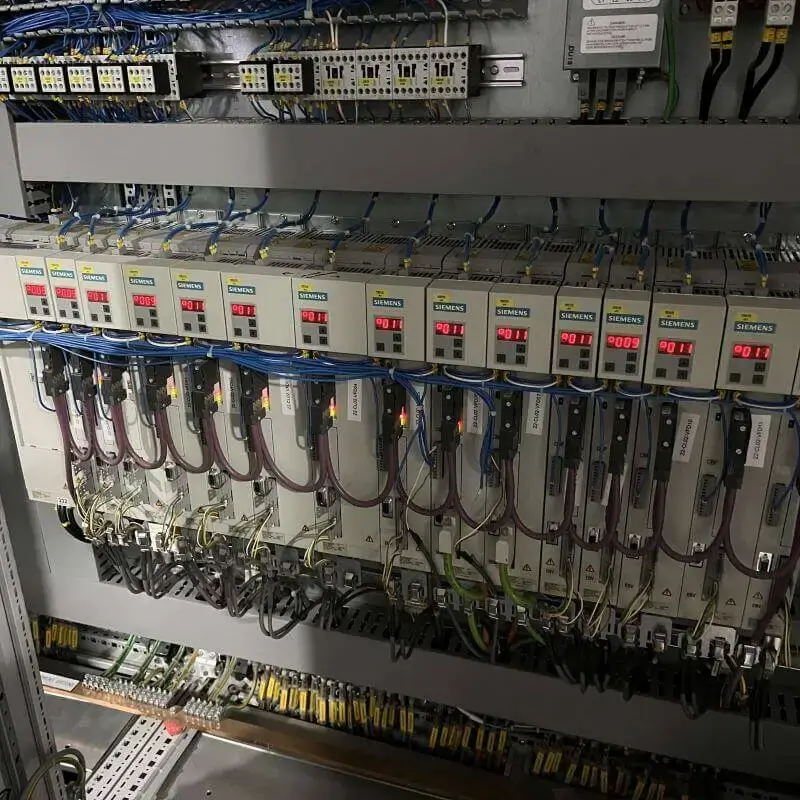
The Quad Plus team was called out to our customer in the newspaper printing industry to troubleshoot faults occurring on their Masterdrive system. At low speeds, the DC bus voltage dropped to about 520V. When trying to operate at line speed, the drive faulted.
Quad Plus Solution
The first step in solving the customer’s problem was to swap out their PCC board with a spare they kept on hand. The drive would then run, but the opposite issue began occurring: DC bus overvoltage when dynamic braking was engaged. This suggests potential problems with the braking chopper or resistors.
We removed the capacitor bank for repair in our lab and the SCRs for testing and possible replacement. Once repairs are complete, we’ll return to reinstall the parts and ensure proper operation at full line speeds.
We also discussed ways to extend the working life of the customer’s equipment with a regular preventive maintenance schedule. As this section of the drive is more than 24 years old, the manufacturer no longer supports the products, and it’s time for the customer to consider upgrade options. Our last stop for the day was to collect copies of files and schematics to assist the customer in future troubleshooting and maintenance.
Understanding the Masterdrive System and DC Bus Voltage
A key benefit of a Siemens Masterdrive system is precision motor control. An important component of the Masterdrive system is the DC bus, which converts AC input into a stable DC voltage for the inverter.
Proper DC bus voltage is critical for reliable operation. The expected DC bus voltage in a 400V AC system is around 560V DC. If the voltage differs from this expectation, it can indicate problems such as component failure, power supply issues, or system inefficiencies.
Common Causes of DC Bus Voltage Dropping in Masterdrive Systems
One common cause of DC bus voltage drops is aging capacitors. Over time, capacitors can lose their ability to store and release power efficiently. Another cause is inconsistent AC input voltage, which generates fluctuations that lead to undervoltage conditions.
Faulty components can also disrupt the conversion process and contribute to unstable voltages. For example, faulty thyristors or diodes can cause unstable voltage.
Preventive Maintenance for Masterdrive Systems
A structured preventive maintenance plan will extend the working life of every major system in your operation, reduce operational costs, and improve performance. Key maintenance steps for Masterdrive systems include:
- Replacing aging capacitors to avoid voltage instability.
- Keeping drive components free of dust and debris to prevent overheating.
- Verifying AC input voltage to ensure consistent performance.
- Regular inspection of cooling systems.
- Monitoring power modules and control boards.
Aging systems eventually become unsupported by the manufacturer, which can lead to components that are difficult to repair and replace. Assessing upgrade options and maintaining critical spare parts can help avoid unexpected causes of downtime.
Common Failure Points for Aging Masterdrive Systems
Aging Siemens Masterdrive systems can face a few common failure points, including:
Proactively monitoring and maintaining these components will extend the system’s overall working life while reducing sources of unplanned downtime.
Troubleshooting Techniques for Masterdrive DC Bus Voltage Faults
Effective troubleshooting starts with checking the AC input voltage to confirm it meets system requirements. DC bus capacitors should be inspected for wear, leaks, or loss of capacitance. Rectifier components, including diodes and thyristors, need to be tested to ensure they are functioning properly. Monitoring system parameters can also help pinpoint anomalies.
Achieve Reliable System Performance with Expert Troubleshooting Solutions
Ensure your equipment runs at peak performance with our expert troubleshooting and repair services. Our team specializes in diagnosing and resolving complex issues like DC bus voltage drops to minimize downtime and boost efficiency.
Contact us today to schedule an evaluation and experience the benefits of reliable, long-term system performance. Trust our proven solutions to keep your Masterdrive systems running smoothly and efficiently.

Frequently Asked Questions
Start by verifying the AC input voltage to ensure it meets system requirements. Check the DC bus capacitors for signs of deterioration and inspect rectifier components for faults that could disrupt voltage conversion. Drive diagnostics that monitor system parameters can identify voltage fluctuations. If issues persist, it’s time to contact an experienced technician for further analysis.
While preventive maintenance will significantly reduce the risk of voltage drops, it cannot eliminate them entirely. Regular capacitor replacements, thorough component inspections, and maintaining clean, properly ventilated drive cabinets will help maintain stable voltage. However, unexpected power fluctuations or component wear can still cause voltage irregularities.
Regularly monitoring the DC bus voltage in Masterdrive systems helps detect early signs of component failure and prevent costly downtime and equipment damage. Voltage fluctuations can indicate issues with capacitors, rectifiers, or AC input instability. Identifying problems early allows corrective action to be taken before faults occur to avoid unexpected downtime.
DC bus overvoltage often occurs when excess energy is returned to the drive during deceleration, especially if the deceleration time is too short or there’s insufficient capacity to absorb the energy. Worn capacitors, faulty braking resistors, or improper drive settings can contribute to the issue. Ensuring proper drive configuration, implementing dynamic braking units, or adjusting deceleration parameters can help prevent overvoltage faults.
DC bus capacitors should be replaced every 7-10 years, depending on operating conditions and manufacturer recommendations. Signs of aging, such as voltage instability, increased operating temperatures, or physical swelling, indicate the need for replacement. Regularly testing and performing preventive maintenance will help identify failing capacitors before they cause system failures.