
The Future of Steel Pipe Coating is Here
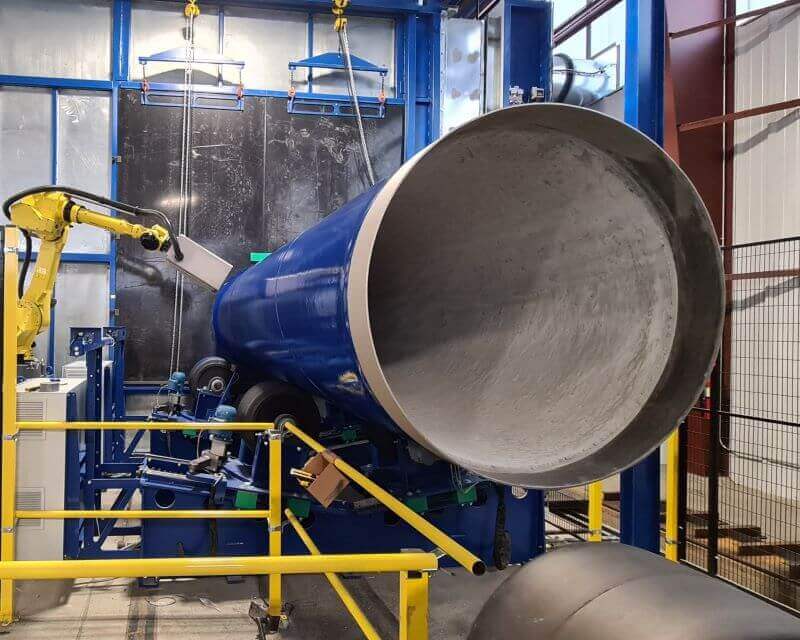
The Quad Plus PipeGuard system meets the AMPP SSPC-PA2 guidelines, which incorporate our process as the basis for THz non-contact pipe coating.
Measure single or multi-layer coating at line speed with online validation for release to specification. Plus, enabling process feedback control to your spray systems or extruder control will further enhance product quality and cost control.
Coating Thickness Measurement for Multi-Layer Steel Pipe Coatings
Achieving consistent coating performance across multiple layers requires precise measurement at every stage of the process. The Quad Plus coating thickness measurement system verifies each layer individually and the total coating thickness.
By using terahertz non-contact gauging, the system accurately measures the coating of steel pipes without damaging the surface or interrupting production. This enables true inline verification of coat thickness for even the most complex pipe coating applications, ensuring full compliance with AMPP and other industry standards.
Key advantages of our multi-layer measurement approach include:
How Coating Thickness Measurement Ensures Quality and Compliance
Every layer of protection matters. Consistent coating thickness measurement guarantees that protective and corrosion-resistant coatings perform as designed under demanding conditions.
With a calibrated thickness measurement system, operators can instantly confirm adherence to specifications such as SSPC-PA2 or ISO 4518 and 2808. Continuous data collection supports quality audits, provides full production traceability, and prevents costly rework or coating failures.
The result is greater process control, extended asset life, and verified compliance with customer and regulatory requirements.
Accurate coating thickness measurement supports compliance by:
- Meeting documented requirements for corrosion resistance and barrier performance.
- Providing traceable data for internal and third-party audits.
- Reducing rework caused by over- or under-applied coatings.
- Maintaining uniform product quality across different coating lines or facilities.
Terahertz Sensors are 100% Human Safe
Terahertz sensors are 100% human-safe, non-nuclear, and non-ionizing, making them widely applicable when factory floor metrology and process control require rugged industrial solutions.
Additional Gauging Brochures
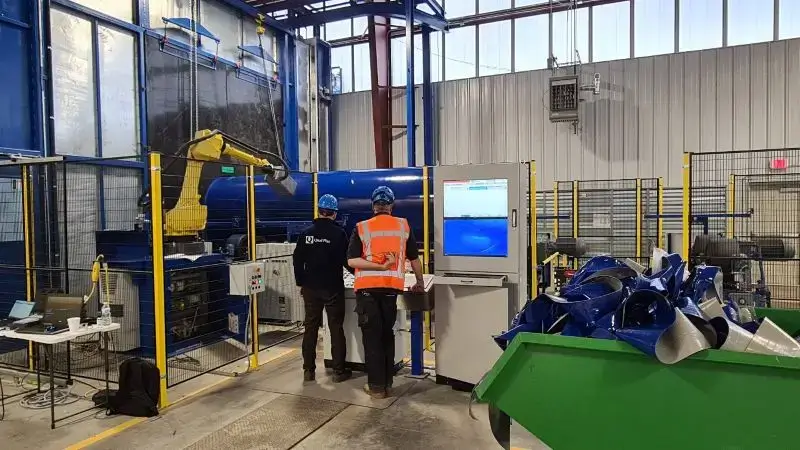
Non-Contact Gauging for Coating Thickness Measurement
Traditional contact probes can introduce variability or surface wear, especially on coated steel or thermally sensitive materials. The Quad Plus non-contact gauging system eliminates that risk entirely.
Using terahertz, magnetic induction, or optical sensor technology for tube manufacturing, these solutions perform precise coating thickness measurement at line speed. They adapt easily to temperature changes, surface textures, and pipe diameters, maintaining high accuracy without requiring operator intervention.
The outcome is faster throughput, improved consistency, and reduced downtime across your pipe coating process.
Advanced Sensor Technology for Accurate Coating Thickness Measurement
Quad Plus combines precision sensing with an intelligent control architecture to provide manufacturers with a comprehensive view of coating performance. Our sensor technology for tube manufacturing captures critical parameters such as surface uniformity, layer adhesion, and thermal stability that standard measurement tools often miss.
By integrating directly into plant automation, each thickness measurement system provides actionable feedback to regulate coating processes automatically. The result is smarter control, reduced startup variability, and consistently high-quality production across all pipe coating operations.
Our advanced sensor systems deliver measurable performance benefits:
Turnkey, Application-Matched Solutions
Accommodating a wide range of specialties, pipe diameters, and coating structures is simple with standard solutions available.
Sensor Technology
Multiple Measurements Every Second
We provide expert help choosing from the following sensor technologies to find the one that’s right for your application:
- Robotic Deployment: For wide OD range, corrugated, spiral-weld, and 3LC. High lateral resolution of weld-seam coating structures through automatic focus stabilization using the Quad Plus environmental THz probe.
- Pitch Scanner: For long runs of standard pipe with minimal OD range. The Quad Plus PipeGuard solution is designed and commissioned to meet your specific process requirements and is integrated into your existing infrastructure.


Software & Reporting
The Best Software on the Market Today
The software uses proven control algorithms to minimize startup waste, enabling you to run closer to targets and reduce material usage in the process.
How does it work? The software interprets data readings and presents operators with easy-to-understand information from the production batch. This allows for real-time identification of production issues as the line is running. Data is also stored for further reporting and analysis after production.
Intuitive reporting tools allow you to filter data down to the control zone. You can also compare scans to identify products that do not meet your quality standards so you can pull them before they are sent out. Plus, real-time displays and reports can be customized, allowing you to focus on the data that matters most to your operations.
Education & Training
Premium Installation, Training, and Support
You need more than just the hardware and software to assemble your gauging system. You need a partner who will be available to you throughout the entire process, from the initial planning all the way through to after-installation support.
Our training will ensure that your systems are optimized and your operators are educated. We cover essential operation mechanics, calibration, routine maintenance, and troubleshooting steps. Plus, the Quad Plus support team is available 24/7 to answer your calls.
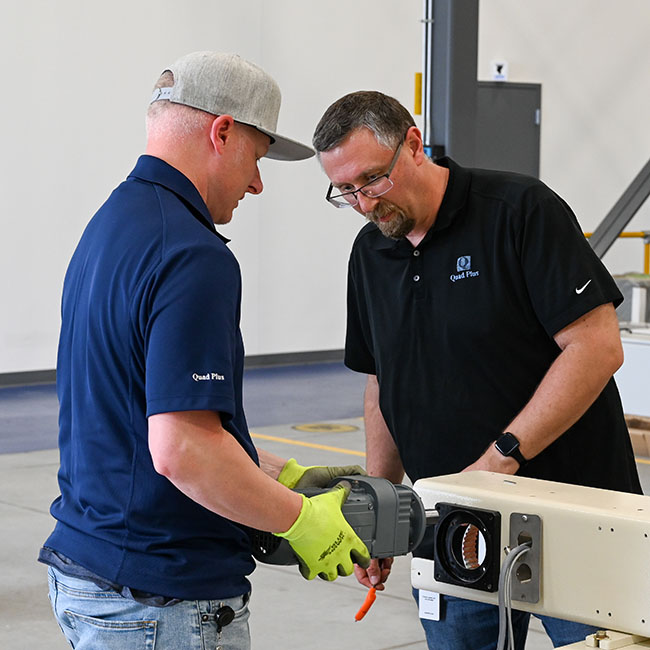
Benefits of Coating Thickness Measurement in Tube Manufacturing
Seamlessly integrate state-of-the-art technology into your existing system to get more from raw materials, reduce waste, and improve production yields.

Metal Coating Thickness Measurement for Protective Applications
Protective coatings on steel pipe demand more than accuracy. They require assurance of adhesion, barrier strength, and long-term corrosion resistance. Quad Plus systems extend beyond simple metal coating thickness measurement by monitoring how each applied layer behaves under operating conditions.
Real-time data analysis detects anomalies such as voids, pinholes, or uneven bonding before they compromise protection. This proactive approach helps ensure every steel pipe coating application meets design standards for durability, efficiency, and environmental resilience.
With Quad Plus measurement systems, you can:
- Detect surface defects such as pinholes or delamination early in the process.
- Validate uniform thickness across weld seams, bends, and pipe ends.
- Maintain consistent corrosion protection while optimizing coating material use.
- Extend maintenance intervals and reduce total lifecycle costs.
Coating Thickness Measurement for Epoxy and Corrosion Layers
Epoxy and corrosion-resistant coatings provide the first line of defense against moisture, chemicals, and abrasion. Quad Plus systems verify the metal coating thickness measurement of each layer to ensure it meets exact design intent and long-term performance requirements.
By integrating advanced sensors and intelligent feedback control, your production team can monitor and adjust coat thickness in real time to achieve complete protection with minimal material waste. Whether applied to pipelines, fittings, or industrial tubing, consistent coating thickness measurement preserves durability and reduces lifecycle maintenance costs.
Accurate measurement of epoxy and corrosion layers helps you:
- Achieve full adhesion and cure depth for maximum corrosion resistance.
- Prevent premature coating failure in harsh environments.
- Optimize material usage while maintaining the target film build.
- Document coating quality for warranty and customer specifications.
Ensure Accuracy with Expert Coating Thickness Measurement
Proper coating thickness measurement is critical for maintaining the integrity of multi-layer protective coatings, including epoxy, corrosion inhibitors, and other industrial finishes. Quad Plus provides precise measurement solutions to verify coating performance and compliance with industry standards.
Don’t risk uneven or insufficient coatings. Contact us today to discover how our measurement systems can safeguard your steel pipes and enhance quality control.
We have experience in your industry.
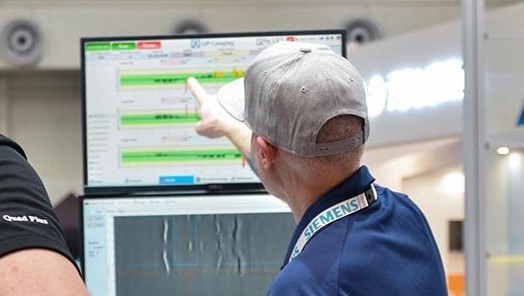
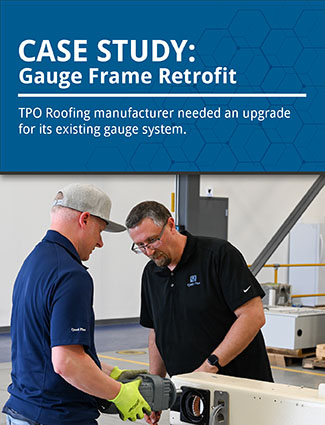
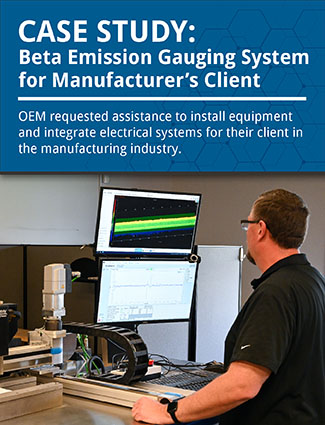
Our system integrators and process engineers have experience in every industry, including paper production, non-woven, extruded plastic sheeting, asphalt roofing, and more.
Frequently Asked Questions
Coating thickness measurement systems use advanced non-contact gauging technologies, including magnetic induction, eddy current, and laser or ultrasonic sensors. These sensor technologies for tube manufacturing provide real-time, high-precision data for pipe coating applications, ensuring consistent coat thickness across metal and non-metal substrates.
Modern coating thickness measurement systems deliver highly accurate readings, even on multi-layer coatings. Using multi-sensor or optical configurations, they can differentiate and measure the coating thickness of each layer within microns. This protection enables better control over metal coating thickness measurement and reduces material waste.
Coating steel pipe should be tested at regular intervals throughout production. Continuous thickness measurement systems enable inline monitoring, while manual verification using a paint coating thickness gauge should be performed during setup, shift changes, or after maintenance to ensure calibration accuracy.
Select a thickness measurement system based on the coating type, pipe diameter, production speed, and environmental conditions. For high-speed or multi-layer pipe coating, a non-contact gauging system with laser or magnetic sensors provides optimal precision and durability. Partnering with an experienced integrator ensures your coating thickness measurement solution aligns with quality and efficiency goals.